

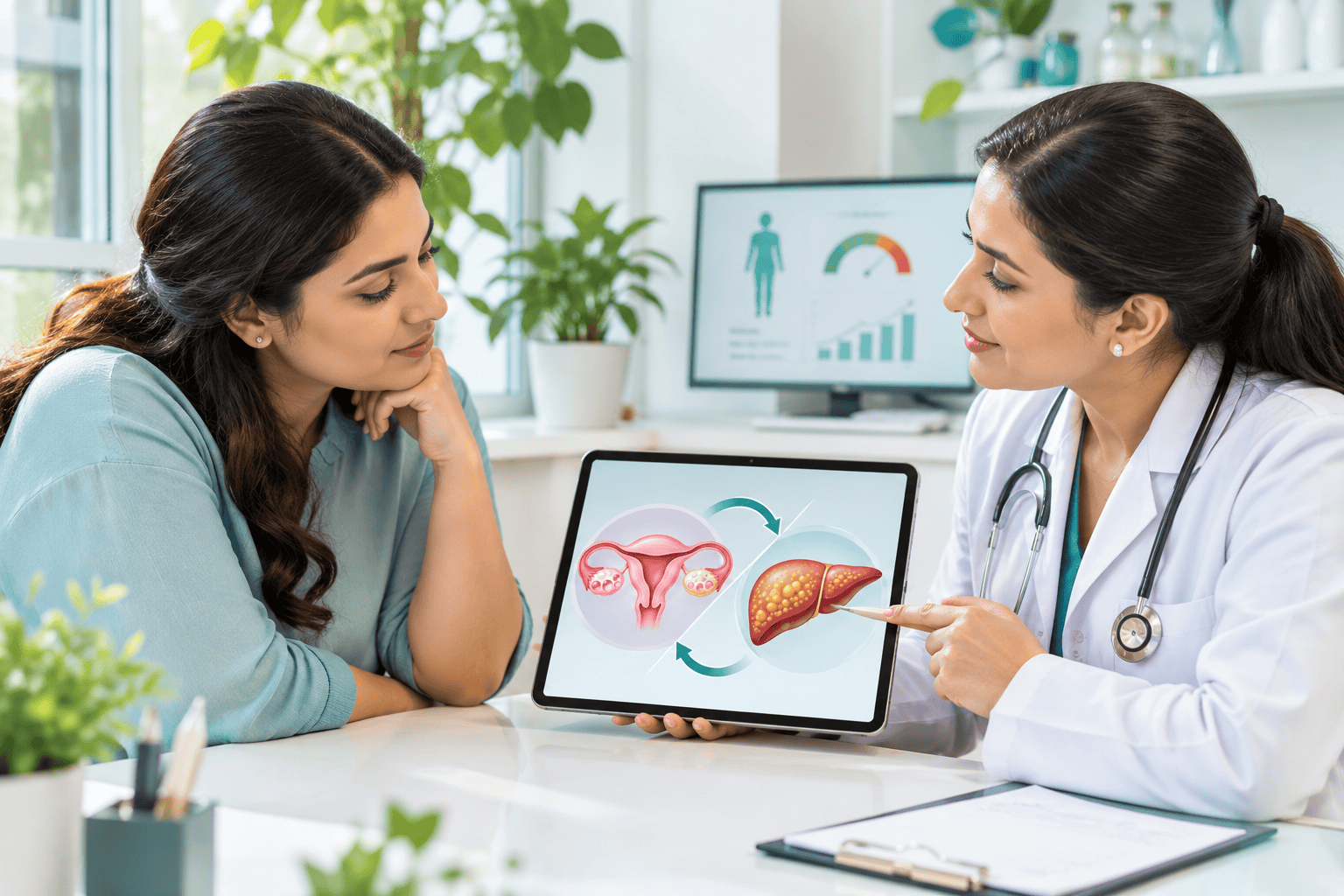
Taking eight hours of sleep daily and still feel exhausted in the morning? Your menstrual cycle is irregular, and your skin breaks out the same as it did at the age of seventeen. However, you eat carefully, but weight settles around your belly, and you know about two important terms: PCOS and fatty liver disease. You may be surprised to know that the PCOS-fatty liver connection, and a third term that may join them, is a metabolic problem called insulin resistance.
This means that the hormones that help your cells turn sugar into energy are not used correctly when insulin resistance is present. This makes it harder to process and break down sugar, which may lead to fat being stored in the liver, as 50% to 70% of women who have PCOS also have insulin resistance. If you are one of them and interested in knowing more about this, then keep reading, as this blog provides you with the knowledge of risk factors for PCOS and fatty liver and a manageable program.

Core Risk Factors for PCOS and Fatty Liver
Various shared risk factors that can have negative effects on the body include:
- Insulin Resistance
The study estimated that 50% to 70% of people who are struggling with both fatty liver and PCOS health conditions also have insulin resistance.
- Obesity
40% to 80% of people with PCOS also have obesity, which can lead to developing SLD.
- Hyperandrogenemia
In this condition, high levels of male hormones in the female body are responsible for insulin resistance, and Insulin resistance is the primary trait in both PCOS and fatty liver.
- Sleep Apnea
When a person sleeps, sleep apnea lowers the oxygen level in the body, which causes inflammation and lowers the amount of protein. Protein is responsible for controlling sugar and fat metabolism; therefore, all these changes can lead to insulin resistance and fat buildup in the liver.

How To Manage Fatty Liver And PCOS?
To manage fatty liver and PCOS, it is important to determine the underlying issues of insulin resistance and obesity, including inflammation. If you follow a healthy lifestyle, it can improve symptoms and reduce the chances of long-term complications.
Diet
The basic and most important part of managing PCOs and fatty liver is to follow a healthy lifestyle, as choosing healthy food can help balance body weight and support overall health.
- Avoid eating fried and processed foods because processed and fried foods are extremely high in unhealthy fat and calories, which are responsible for weight gain and inflammation.
- Avoid red meat and other processed meats because these foods are high in saturated fat and salt, which can lead to inflammation.
- You should avoid high-sugar foods and drinks because your body converts high sugar into excess fat, and this can build up in the liver over time.
- High consumption of alcohol is processed in the liver, which can cause inflammation.
- You should eat oily fish, walnuts and foods that are rich in omega-3, as this type of food helps to reduce inflammation and improve liver health.
- You can use olive oil rather than butter, and it is better to eat foods such as brown rice and barley, as these foods have more fiber and nutrients, which can help to regulate blood sugar in the body.
Stay Active
In many cases, people with PCOS also struggle with depression and eating disorders, and managing it is the best way to stay busy doing something. This is the best way to improve your physical and mental health, as experts suggest high-intensity exercise two to three times weekly, such as dancing and running, is effective.
Lose weight
Weight loss can be very helpful in reversing fatty liver and lowering inflammation. Eating a healthy diet and regular exercise is an effective method of weight loss, as you can eat five servings of fruits and vegetables every day. Apart from that, you can choose lean meat such as chicken and fish, with a goal of 150 minutes of exercise.
Control Stress
Some experts suggest that stress also plays an important role in both PCOS and fatty liver diseases. Women with PCOS have higher levels of stress hormones, and these levels may be higher than those in people with obesity. Unhealthy habits may be associated with stress, such as smoking and poor eating, along with a lack of exercise.
Regular Sleep
Not getting enough sleep can disturb important hormones in the human body, including the hormone that is connected to stress and weight. People who do not get sufficient sleep can develop fatty liver and obesity, including hormonal imbalance.
Conclusion
There are a plethora of reasons associated with PCOS and fatty liver disease, and numerous pieces of evidence indicate that people with PCOS are more likely to develop fatty liver. These two conditions can cause further health problems if not treated in a timely manner. The good news is that in many cases, there is no need for expensive medication or long-term treatments.
To manage PCOS and fatty liver, changing lifestyle habits, such as healthy eating and regular exercise, along with stress management, can help improve symptoms. If you observe that you might have PCOS and fatty liver, you should consult a professional doctor to evaluate the issues.
For world-class gastroenterology and gynecology treatments, you can book an appointment with Ameritus Hospital, where you can consult with Dr. Suchita Batra for gynecological problems, and if you are struggling with gastro-related diseases, then Dr. Kartik Goyal, MBBS and DM (gastro), can provide you with the best consultation and treatments.
FAQs
Can I manage weight with fatty liver and PCOS?
It is possible to lose weight with PCOS and fatty liver conditions by following healthy eating habits and regular exercise.
In the condition of a fatty liver, is it safe to get pregnant?
If you are a woman with simple fat accumulation without severe liver damage, it is considered safe to get pregnant, but you should consult your healthcare provider for a healthy pregnancy.
If I develop fatty liver during pregnancy, can it be reversed and remain pregnant?
It is difficult to reverse the acute fatty liver that you develop during pregnancy, and in this condition the only treatment is to give birth right away.
In the human body, which hormone is responsible for fatty liver?
There is no particular hormone responsible for fatty liver; however, less estrogen circulating through your body after menopause can lead to a higher risk of developing fatty liver.
